Now Available!

The Lunatecs are an ancient race of technicians that have always worked hard to keep the moon shining. But, over time, their society has dwindled to the point that Aruna seems to be the very last one.
Now, joined by her new friend Bae Lee, she must embark on a perilous journey to the sun to find a way to keep the whole moon from going dark!
9781945432590
34 pages, color illustrations, hardcover
9781945432606
34 pages, color illustrations, paperback
Printing of paperbacks are now taking 7-9 days and hardcovers are about 14 days. If you need them by the end of December, Amazon Prime is probably the best option.
Now Available
978-1-945432-61-3
46 pages, color illustrations, paperback
$15.95 + fixed $5 shipping
Printing of paperbacks are now taking 7-9 days and hardcovers are about 14 days. If you need them by the end of December, Amazon Prime is probably the best option.
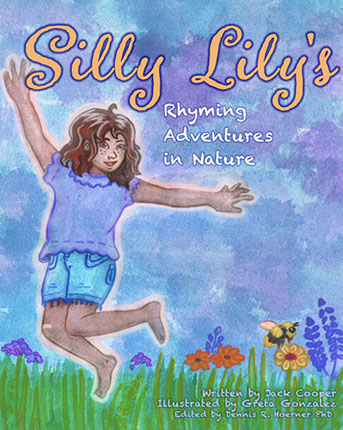
Silly Lily lives in a small apartment with her parents and cats in the medium-sized city of NoFrown Town, but her heart lies in the big outside. She loves lilies, of course, and all the beautiful flowers, but animals the most.
She treasures books and videos, but every chance she gets she goes to the Peek-A-Boo Zoo, the NoHarm Farm, the Peach Beach and the Please Trees Woods. Sometimes she travels alone, sometimes with family or friends.
When not on a real adventure, she daydreams about one. Whether it’s An Aardvark that searches in the bark for bugs in the dark, or A Goat that ate her coat right off the boat, whatever Lily sees in nature, it somehow magically rhymes, and she would like nothing more than to share her adventures with everyone, who might in turn learn something along with her.
Whether she travels by skateboard, bike or bus, she always stays safe, and friends and other good people love to help her.
Now Available
Now Available
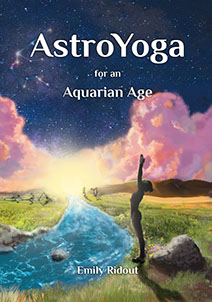
Combine astrology and yoga to tap into your cosmic purpose
In AstroYoga for an Aquarian Age, AstroYoga specialist Emily Ridout layers together the theory and practices that help you tap into the powers of the cosmos within. AstroYoga applies astrology to yoga to unlock a sense of deeper purpose and alignment with the universe and yourself. Exploring the pages of this book will help you use AstroYoga to examine the character of time and your place within it. Ultimately, the AstroYoga concepts in this book encourage transcending theory and stepping into the fullness of your being through the informed, intuitive dance with the planets, stars, and luminaries.
Take your yoga practice to the next energetic level using the zodiac
Dive into the theory and practice of AstroYoga to enter into a deep contemplation of the cosmos and its connection to the many layers of the human form. Consider how energetic channels, layers of the subtle body, biological function, and the chakra system interact with the zodiac, planets, and luminaries. Gain an understanding of the zodiac to view your body and your yoga practice in a new way.
Discover greater satisfaction, peace, and joy with AstroYoga
The nature of AstroYoga is participatory, meaning you can interact with your body and the cosmos to affect change. Practice AstroYoga to create wellbeing and alignment in various areas of your life, starting within yourself. In the Aquarian Age, more people will step into the fullness of their beings to release suffering and embody greater satisfaction, peace, and joy. The theory and practice of AstroYoga can help you create alignment in the dawning age to come.
Paperback $22.00 + S/H
164 pages, 7"x10"
ISBN 13 - 978-1-945432-53-8
Young Bear is a heartwarming delight for readers of all ages.
This mythological tale, set in a mountainous, rural New England village, features enchanting illustrations, poetry, and prose with unfolding events that transpire in both earthly and spirit worlds. The tale includes a tight-knit pagan community and the lives of a pair of Eastern black bears. An elderly farmer lives close to Earth, in harmony with ever changing seasons. His wife leads family and friends in celebration of blended and traditional Celtic nature holidays. A young couple prepares for the birth of their first child. The bears’ lives are disrupted when two strangers come to town, but the uncommon bond between Young Bear and her mate transcends the living world.
A portion of the profits from the sale of this book will be contributed to keystone organizations dedicated to providing shelter...building homes, rebuilding and protecting vulnerable communities and natural ecosystems.
Here for details:
Paperback $17.50 + S/H
48 pages, 8.5"x9.44"
ISBN 13 - 978-1-945432-55-2

Now Available

Paperback $12.95 + S/H
110 pages, 7"x10"
ISBN 13 - 978-1-945432-51-4
Following on from my first book, Can You Hear Me Now: Finding My Voice In A System That Stole It, the progress I’ve made both personally and with Health Care Services is incredible. Once scared into silence, my first book served as a platform to allow me to lift my head and my heart to follow my passion to help others coming into contact with services because of their Mental Health. Understanding that not every service is the right fit for each person, but feeling intensely that if it wasn’t necessarily going to be the thing to help them...at least don’t hurt them! I hope that in this book, Resilience, A Person Not Just A Patient, you can feel the hope between the pages, the soul-searching I’ve done to find ways of wellbeing that are finally working for me and above all see the link between our brains, bodies and hearts.
Angela’s work continues to be of such huge importance to our community and country. Her unique insights and her gift of writing convey what many cannot, about struggles and experiences of mental health. This book is vital and so is Angela.
— Hannah Bardell, MP for Livingston. House of Commons, Parliament. London, UK


$17.95 + S/H
Paperback, 270 pages, 5.5" x 7.5"
ISBN 978-1-945432-48-4
Quimby's Quandary
by Jerome Vergamini
$17.95 + S/H
Paperback, 202 pages, 7" x 10"
978-1-945432-50-7
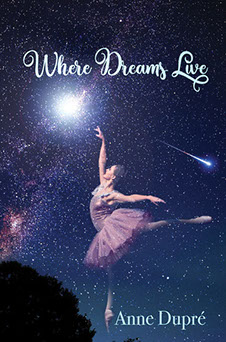
Where Dreams Live
$15.95 + S/H
Paperback, 224 pages, 5.5" x 8"
ISBN 978-1-945432-49-1
¡La serie popular, Libro De Cuentos Para Colorear del Chef Andre Royal, ahora disponible en español!


2 for $12 + S/H sale


$16.50 + S/H

34 pages, 8.5" x 8.5"
Color illustratons.
Hardcover - Collector's Edition
ISBN 978-1-945432-32-3
$19.95+S/H
44 pages, 8" x 8"
Color illustrations.
paperback
$16.50+S/H
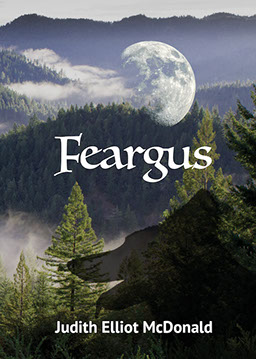
A novel by Judith Elliot McDonald
Award-Winning Finalist in the the 2019 International Book Awards.

226 pages, 6" x 9"
Hardcover
ISBN 978-1-945432-31-6
$18.95+S/H
Orders will ship two to three business days after purchase.
Pre-order now.
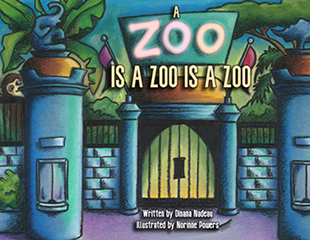
A Zoo is a Zoo is a Zoo
by Diana Nadeau
illustrated by Norinne Powers
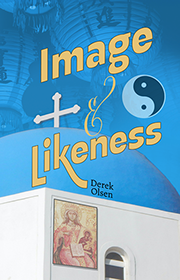
A novel by Derek Olsen
The Clepsydra by Derek Olsen
978-1-945432-29-3
Paperbck, 260 pages.
$15.00 + S/H


56 pages, 6.5" x 6.5"
Color an B/W photos.
Paperback
ISBN 978-1-945432-35-4
$10.95+S/H
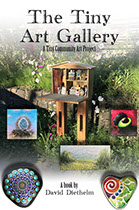
by David Diethelm
Over 60 color pictures of the art and Gallery.
$14.95 +S/H
Winner of a 2018 Family Choice Award and Purple Dragonfly Book Award!

Read a wonderfully written review on OnlineBookClub.org
Official Review: Pola's Flower by Diana Nadeau


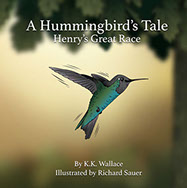
Written and Illustrated by Richard Sauer
Written by Rebecca Norton Miller
Dearsie by Rebecca Norton Miller
978-1-945432-28-6
166 pages, paperback.
$15.00 + S/H
Award-Winning Finalist in the the 2019 International Book Awards.

58 pages, 8.5" x 8.5"
Color Illustrations
ISBN 13 - 978-1-945432-19-4
40 pages, 8.5" x 8.5"
Color Illustrations
ISBN 978-1-945432-27-9
Order a copy for $13.00+S/H or from Amazon HERE

140 pages, 6" x 9"
Paperback
ISBN 978-1-945432-30-9
$11.95+S/H

About Eco-Justice Press
The purpose of Eco-Justice Press is to provide a venue for scholars, writers, and activists who wish to contribute to educational reforms that focus on ecologically and culturally sustainable theories, ideas, issues and practices. We seek to promote an advanced level of informed discussion by classroom teachers, university professors, and the general public about the role of education in making the transition to a sustainable future. Thus, we invite others to participate in a critique of traditional patterns of thinking and values that underlie an individualistic / consumer-dependent / industrial culture, and in articulating a more social and eco-justice paradigm...
read more
What We Offer
• Wide distribution
• Assistance for first time authors
• Low cost and streamlined process
• In-house design available
Winner of a 2015 Family Choice Award and a 2015 Skipping Stones Honor Award!
Lighting the Earth
now also now available in paperback and e-book
Field Guide To The American Teenager:
A Survival Guide For Parents
by Jerome C. Vergamini, MD
and Ray Miskimins, Ph.D.
2017 Family Choice Award Winner and Purple Dragonfly Book Award Honorable Mention Winner
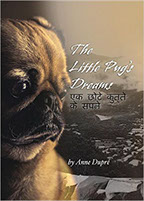





54 pages, 5.83 x 8.27"
$7.95 + s/h
Paperback $16.95 + S/H
240 pages, 6"x9"
ISBN 13 - 978-1-945432-09-5



Eco-Justice Press, L.L.C. © 2011-2023
$16.00 + S/H
Paperback, 312 pages, 6" x 9"
ISBN 13 - 978-1-945432-42-2